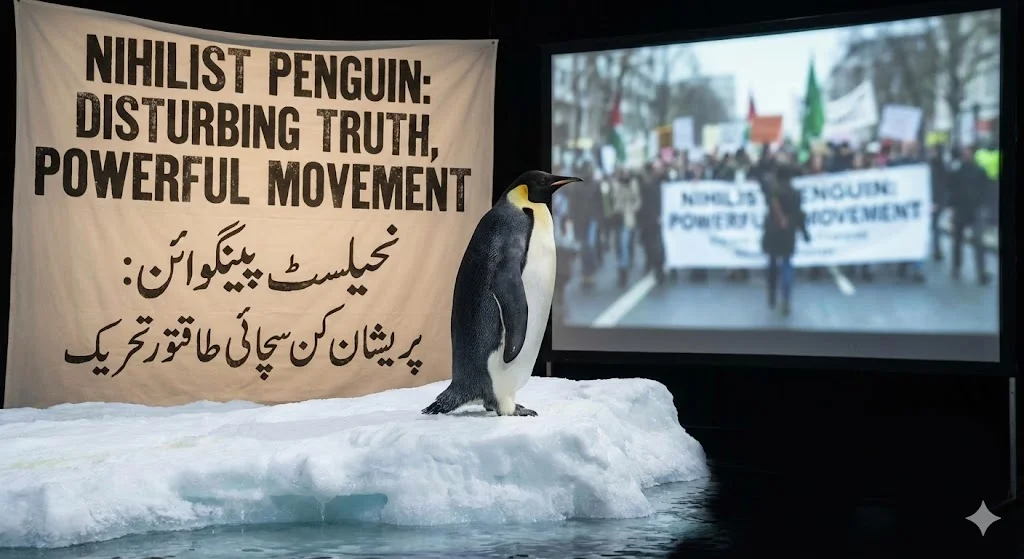
How one penguin’s video motivated and traumatised the internet? In a startling example of content with enduring impact, a clip from Werner Herzog’s 2007 documentary, ‘Encounters at the End of the World,’ has recently taken social media by storm, leaving viewers both profoundly motivated and deeply traumatised. This particular penguin’s video, widely dubbed “Nihilist Penguin,” captures a solitary Adelie penguin embarking on a walk that appears to defy all natural instinct, heading inland towards certain doom.
The bizarre and poignant journey of this lone bird has captivated a new generation online, almost two decades after its initial release. Its resurgence as a viral internet phenomenon highlights how particular narratives, disconnected from their original context, can resonate universally. From TikTok comments sparking broader discourse about time and change to the widespread sharing of nostalgic “2016 snaps,” the internet constantly seeks new forms of collective introspection and emotional engagement.
The Origins of the Nihilist Penguin: An Antarctic Isolation
The now-iconic penguin’s video originates from ‘Encounters at the End of the World,’ a critically acclaimed documentary directed and narrated by the inimitable Werner Herzog. Released in 2007, the film explores the desolate beauty and curious inhabitants of Antarctica, focusing on peculiar individuals and phenomena at the edge of human understanding. Herzog’s distinct narrative voice, infused with philosophical musings, perfectly frames the scene of the renegade penguin.
In a segment that has become central to the internet’s fascination, Herzog films a single Adelie penguin ostracized or choosing to separate from its thriving colony. Instead of joining its peers in their customary routines, this bird turns its back on the ocean and its community, beginning an arduous march inland across the frozen plains. This solitary walk, as Herzog notes, is a journey “towards the mountains, some 70 kilometres away,” an almost certain path to death due to starvation and the extreme environment.
Exploring the Deeper Meaning Behind the Penguin’s Video
The penguin’s video has sparked a fervent debate across platforms like TikTok, X (formerly Twitter), and Reddit, revealing the various ways humans project their own anxieties and aspirations onto the animal kingdom. For some, the penguin’s unwavering march represents a powerful metaphor for motivation and self-determination. They interpret its solitary journey as a defiant refusal to conform, an inspiring pursuit of an individual path, even against insurmountable odds.
Motivational edits, often set to uplifting music, praise the penguin’s “never settle” attitude, urging viewers to follow their own independent goals. This perspective transforms the penguin into a symbol of ambition, encouraging people to break free from perceived limitations and march bravely towards their personal “mountains,” regardless of the difficulty. The appeal, in this context, lies in the sheer audacity of its self-directed journey.
The Traumatising Impact of the Penguin’s Video: A Symbol of Despair
Conversely, a significant portion of the internet audience finds the penguin’s video deeply traumatising. This interpretation focuses on the inherent tragedy and futility of the bird’s journey. Herzog himself frames it with an almost existential melancholy, posing questions to a scientist, Dr. Anley, about the concept of “insanity” among penguins. “What if a penguin has had enough of its colony?” he muses, highlighting the perplexing nature of the bird’s actions.
The scientist’s response, as narrated by Herzog, reinforces the sense of tragic inevitability: “Dr. Anley explained that even if we caught him and brought him back to the colony, he would immediately head right back for the mountains.” This detail deepens the emotional impact for viewers, suggesting a profound, inexplicable despair. For many, the lone penguin embodies a sense of overwhelming loneliness, purposelessness, or an inescapable draw towards an unknown fate, resonating with human feelings of alienation or burnout. This raw depiction of a creature seemingly choosing its own end has provoked genuine sadness and empathy, turning the Nihilist Penguin into a potent, albeit disturbing, symbol. For more insights into social phenomena and trending content, visit Schemess.com.

Why The Penguin’s Video Endures: A Reflection of the Human Condition
The lasting appeal of this particular penguin’s video lies in its ambiguity and its capacity to act as a mirror to complex human emotions. Herzog’s deliberate decision to offer no clear scientific explanation for the penguin’s behaviour—beyond the acknowledgement of its unusualness—leaves an open canvas for interpretation. Is it an anomaly of nature, a biological malfunction, or a profound act of avian self-will?
This lack of definitive answers allows the audience to project their own experiences and philosophies onto the scene. In a world often searching for meaning and purpose, the Nihilist Penguin confronts viewers with questions about free will, destiny, community, and isolation. Its journey becomes a metaphor for human struggles, igniting discussions about mental health, societal pressures, and the individual’s place within a collective.
The Unexpected Viral Phenomenon: Social Media’s Power
The resurgence of the penguin’s video nearly two decades after its release is a testament to the dynamic nature of social media and its capacity to unearth and recontextualize content. What was once a philosophical aside in an arthouse documentary has become a widespread social media sensation, reaching millions who may never have seen the original film. The brief, captivating clip, stripped of its longer documentary context, becomes a Rorschach test for the internet, prompting widespread commentary and emotional responses. It’s a striking example of how a single, powerful image, accompanied by minimal narration, can bypass language and cultural barriers to evoke universal feelings.
FAQs about the “Nihilist Penguin” Video
1. What is the “Nihilist Penguin” video?
It’s a viral clip from Werner Herzog’s 2007 documentary “Encounters at the End of the World” showing a lone Adelie penguin walking away from its colony and towards mountains inland, seemingly to its death.
2. Why is the penguin walking away from its colony?
The documentary does not provide a definitive scientific reason. Werner Herzog speculates about “insanity” in penguins and a desire to leave the colony, but no clear motivation is offered, contributing to its mysterious and poignant nature.
3. What is the documentary “Encounters at the End of the World” about?
Directed by Werner Herzog, the 2007 documentary explores the lives of various individuals living and working in Antarctica, along with the unique wildlife and surreal landscapes of the continent, often with philosophical narration.
4. Why has this video gone viral now, years after its release?
Its recent virality on platforms like TikTok and X is due to social media’s ability to resurface and recontextualize content. The clip’s ambiguity allows for diverse interpretations, making it relatable to modern discussions about motivation, loneliness, and existential themes.
5. How has the internet reacted to the “Nihilist Penguin” video?
Reactions are split: some find it highly motivating, seeing the penguin as a symbol of individuality and pursuing goals against odds. Others find it deeply traumatising, interpreting its journey as a tragic symbol of isolation, despair, or a futile march towards death.
6. Does the penguin actually die in the video?
The documentary clip does not show the penguin’s ultimate fate. It only shows the beginning of its solitary march towards the mountains, leaving its ultimate demise to implication and the viewer’s imagination, based on the harsh Antarctic environment.
7. Who is Werner Herzog and what is his role in the video?
Werner Herzog is a renowned German filmmaker, director, screenwriter, and actor, known for his distinctive narrative style and exploration of grand themes. He directed and narrated “Encounters at the End of the World,” including the segment featuring the “Nihilist Penguin.”
Conclusion: The Enduring Impact of One Penguin’s Journey
The viral phenomenon of the “Nihilist Penguin” underscores the internet’s extraordinary capacity to imbue old content with new meaning and widespread emotional resonance. A scene from a 2007 documentary, initially a brief, philosophical interlude, has become a potent symbol for millions, simultaneously igniting feelings of profound motivation and deep trauma. The ambiguity surrounding the penguin’s solitary journey—whether an act of defiance or a tragic march towards the inevitable—allows it to serve as a versatile metaphor for the human condition. As discussions around the penguin’s video continue to unfold, it clearly demonstrates how a single, captivating image, framed by artistic narration, can transcend its origins to become a powerful, enduring touchstone for collective introspection and emotional discourse in the digital age.