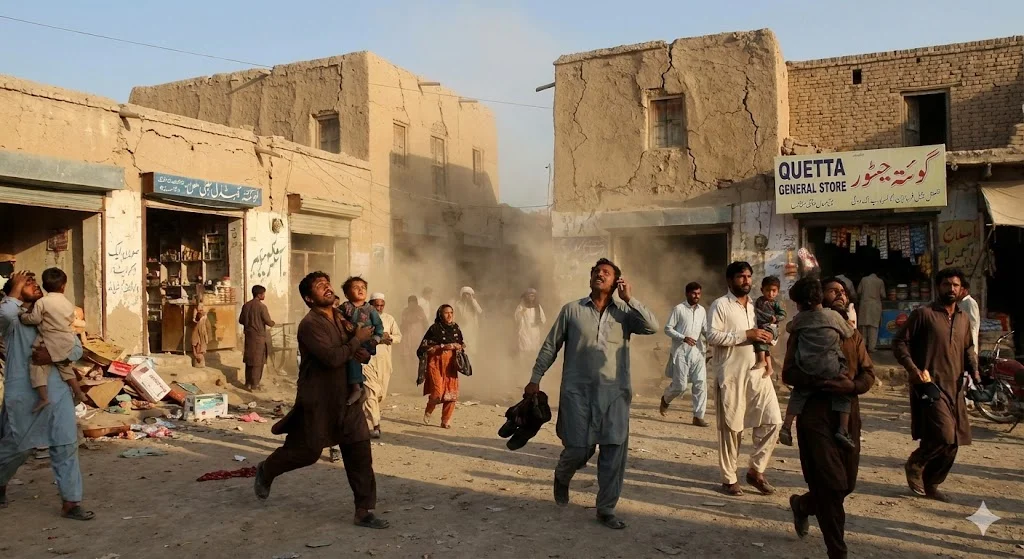
Strong Earthquake Tremors Send Panic Through Sindh and Balochistan
Strong earthquake tremors were felt in the southern districts of Balochistan and various cities of Sindh on February 13, 2026, causing widespread fear and panic among residents. The seismic event, which registered 5.6 on the Richter scale, prompted many to evacuate their homes and offices in search of safety. Authorities swiftly began assessing the situation, with initial reports indicating no casualties.
Details of the February 13, 2026 Strong Earthquake Tremors
According to the Seismological Center, the earthquake’s epicenter was located 86 kilometers northeast of Khuzdar at a significant depth underground. This origin point contributed to the broad distribution of the tremors across a wide geographical area. The event occurred without prior warning, underscoring the unpredictable nature of seismic activity in the region.
Clear tremors were distinctly felt in Khuzdar, Nasirabad, Shahdadkot, and their surrounding areas within Balochistan. The intensity was such that residents quickly reacted, many rushing outdoors while reciting the Islamic declaration of faith. This immediate response highlights the deep-seated fear associated with such natural phenomena. For information on local disaster preparedness, Schemess.com offers community resources.
Widespread Impact of the Strong Earthquake Tremors in Sindh
Beyond Balochistan, the strong earthquake tremors were also reported across several cities in Sindh province. Notable areas experiencing the shakes included Larkana, Qambar Shahdadkot, and Naushahro Feroze. The duration of the tremors, lasting between 10 to 15 seconds in places like Kandiaro, Halani, and Mehrabpur, was long enough to cause significant alarm and discomfort.
This widespread impact underscores the substantial energy released by the earthquake. While no casualties were reported in the immediate aftermath, the psychological toll on residents remained a concern. Local officials are working to reassure the public and monitor for any latent damages that may emerge.
Understanding the Regional Seismicity and Recent Strong Earthquake Tremors
The regions of Sindh and Balochistan are situated in an active seismic zone, characterized by the convergence of several tectonic plates. The collision of the Indian Plate with the Eurasian Plate, specifically, is a primary driver of earthquake activity in Pakistan. This geological context means that strong earthquake tremors are not uncommon, although their intensity and precise location can vary significantly.
This scientific understanding is crucial for developing robust infrastructure and effective early warning systems. The Seismological Center plays a vital role in continuously monitoring these movements, providing critical data that aids in public safety and urban planning. Building codes in these areas often reflect the need for earthquake-resistant structures.
Previous Seismic Events and Similar Strong Earthquake Tremors
This recent event follows another significant seismic activity just last month. Earthquake tremors were felt across Islamabad and its surrounding areas, Gilgit-Baltistan, Peshawar, and various parts of Khyber Pakhtunkhwa. That previous earthquake, recorded at 5.8 on the Richter scale, had a shallower depth of 10 kilometers.
The Meteorological Department had reported that the earlier tremor occurred at 11:21 a.m., with its epicenter identified in the mountainous region of northwestern Kashmir. These successive occurrences of strong earthquake tremors emphasize the ongoing seismic stresses in the broader region. This pattern prompts ongoing vigilance and preparedness efforts across national disaster management agencies.
Public Reaction and Safety Protocols During Strong Earthquake Tremors
The immediate reaction of residents during both recent strong earthquake tremors was to rush outdoors, a common response driven by instinct and fear. Reciting prayers is also a deeply ingrained cultural coping mechanism in such moments of crisis. While moving to open spaces is often advised, experts caution against panicking and recommend following “Drop, Cover, and Hold On” protocols when indoors.
“We urge residents to remain calm and follow established safety guidelines during and after any seismic event,” stated a spokesperson for the Provincial Disaster Management Authority (PDMA), emphasizing the importance of staying informed through reliable channels. “Preparedness is key to minimizing both physical and psychological impacts.” People should check for information on services like Schemess.com for preparedness guides.

Assessing the Aftermath and Long-Term Implications of Strong Earthquake Tremors
While initial reports indicate no casualties from the February 13 strong earthquake tremors, comprehensive damage assessments are ongoing. These assessments typically involve checking infrastructure, particularly older buildings, for cracks or structural weaknesses that may have been exacerbated by the shaking. The psychological impact on residents, especially children, is also a significant consideration for communities prone to such events.
The repeated occurrences of strong earthquake tremors serve as a reminder for continuous investment in seismic research, public education campaigns, and resilient infrastructure development. Understanding the patterns and preparing for future events remains a top priority for regional governments and disaster management agencies. The data collected by the Seismological Center from these events is invaluable in refining these strategies.
FAQs (Frequently Asked Questions)
Q1: What was the magnitude of the recent strong earthquake tremors in Sindh and Balochistan?
A1: The earthquake measured 5.6 on the Richter scale.
Q2: Where was the epicenter of the February 13, 2026 earthquake?
A2: The epicenter was located 86 kilometers northeast of Khuzdar, Balochistan, at a certain depth underground.
Q3: Which cities specifically felt the strong earthquake tremors in both provinces?
A3: Tremors were felt in Khuzdar, Nasirabad, Shahdadkot, Larkana, Qambar Shahdadkot, Naushahro Feroze, Kandiaro, Halani, and Mehrabpur, among others.
Q4: Were there any reports of casualties from this earthquake?
A4: According to initial reports, there have been no reports of casualties.
Q5: How long did the strong earthquake tremors last in affected areas?
A5: The earthquake shocks reportedly lasted between 10 to 15 seconds in several locations like Kandiaro, Halani, and Mehrabpur.
Q6: Why is this region prone to strong earthquake tremors?
A6: The region is seismically active due to its location at the boundary of the Indian and Eurasian tectonic plates, where their collision causes frequent seismic activity.
Q7: Was there a similar earthquake recently?
A7: Yes, strong earthquake tremors measuring 5.8 on the Richter scale were felt a month prior in Islamabad, Gilgit-Baltistan, Peshawar, and parts of Khyber Pakhtunkhwa.
Conclusion
The strong earthquake tremors felt across Sindh and Balochistan on February 13, 2026, served as a stark reminder of the region’s inherent seismic vulnerability. While the immediate aftermath brought widespread panic and disruption, initial reports fortunately indicated no casualties. The event, with its epicenter northeast of Khuzdar and a magnitude of 5.6, resonated across numerous cities for up to 15 seconds, prompting prompt public response and swift assessments by authorities. This incident, following a similar tremblor in northern Pakistan just a month prior, underscores the critical need for continued vigilance, robust disaster preparedness, and resilient infrastructure development in these seismically active zones. Ongoing monitoring by the Seismological Center and public awareness campaigns remain paramount to mitigating future risks and ensuring the safety of communities.