BISP Nashonuma Payment: A Vital Lifeline for Maternal and Child Health in Pakistan
The BISP Nashonuma Payment is a cornerstone initiative designed to tackle malnutrition and improve critical maternal and child health indicators across Pakistan. Launched under the umbrella of the Benazir Income Support Programme (BISP), a flagship social safety net, the Nashonuma Programme specifically targets the most vulnerable segments of society: pregnant and lactating women, and children under two years of age. Its aim is to break the intergenerational cycle of malnutrition by providing conditional cash transfers (CCTs) linked to specific health and nutrition interventions. This strategic approach ensures that financial aid translates directly into improved health practices and better developmental outcomes for young children.
Understanding the BISP Nashonuma Payment Initiative
The Benazir Income Support Programme (BISP), established in 2008, serves as Pakistan’s largest social safety net, providing financial assistance to impoverished families. In 2020, BISP expanded its scope with the introduction of the Nashonuma Programme, specifically focusing on nutrition. This program recognizes that early childhood nutrition is paramount for a child’s cognitive and physical development. The BISP Nashonuma Payment is not merely a handout; it is a conditional cash transfer designed to incentivize regular healthcare visits and adoption of healthy behaviors among beneficiaries.
The Nashonuma Programme’s inception marked a significant step in Pakistan’s battle against widespread stunting and wasting among children. According to UNICEF, roughly 40% of children under five in Pakistan are stunted, a condition that permanently impairs physical and cognitive development. By integrating nutritional support with healthcare, the BISP Nashonuma Payment aims to create a healthier future for the nation’s youngest generation, ensuring they receive essential nutrients and prompt medical attention during their critical developmental window.
The Core Objectives of Nashonuma Programme Payments
The primary objective of the Nashonuma Programme Payments is to mitigate malnutrition by providing financial incentives for adherence to vital health practices. Beneficiaries, primarily pregnant and lactating women, receive quarterly payments upon fulfilling specific conditions. These conditions include regular antenatal care (ANC) check-ups during pregnancy, safe delivery practices, post-natal care (PNC), and ensuring their children receive all mandatory vaccinations and growth monitoring services until the age of two.
This conditional nature is crucial. It ensures that the funds provided directly contribute to improving health outcomes rather than just serving as general income support. Data from the World Bank and other development organizations consistently show that CCTs are highly effective in increasing the utilization of health services among vulnerable populations. The BISP Nashonuma Payment strategically leverages this proven model to foster better maternal and child health habits among its beneficiaries.
Eligibility Criteria and How to Access BISP Nashonuma Payment
To qualify for the BISP Nashonuma Payment, individuals must already be registered BISP beneficiaries. The programme specifically targets women who are pregnant or lactating, and children under two years of age within these beneficiary households. The registration process involves visiting a designated Nashonuma Facilitation Centre, typically located within BISP offices or partner health facilities. Here, women provide their Computerized National Identity Cards (CNIC) and undergo a basic health screening.
Upon successful registration, women are enrolled in the programme and are guided on the conditionalities they must meet. These include regular visits to health facilities for check-ups, nutritional guidance, and childhood immunizations. This structured approach simplifies access to the BISP Nashonuma Payment system for those who need it most, ensuring they are integrated into a supportive health network.
Distributing BISP Nashonuma Payments: The Process
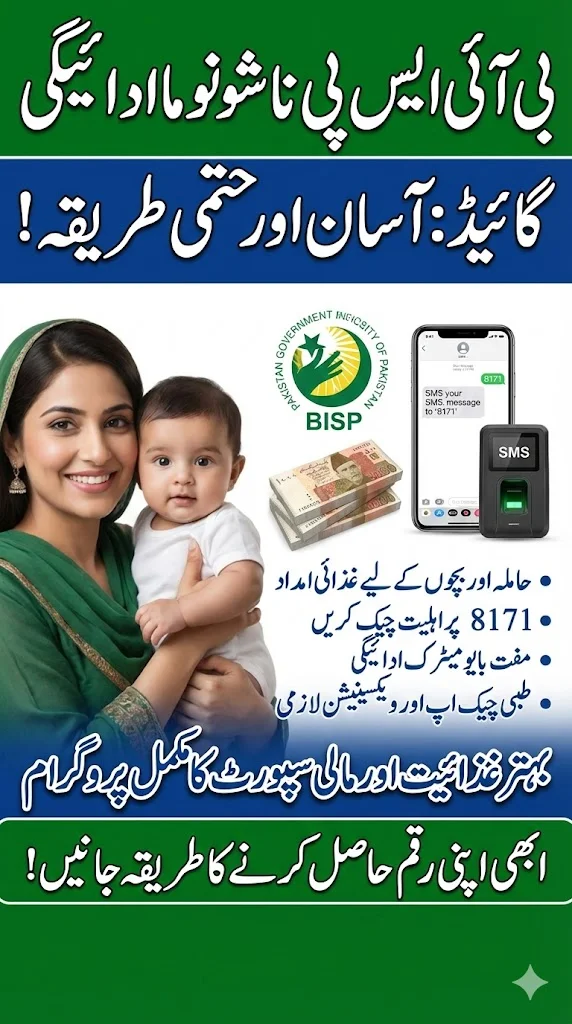
The disbursement of BISP Nashonuma Payments is meticulously structured to ensure transparency and accountability. Payments are typically made quarterly and are linked to the verification of compliance with health conditionalities. This verification often occurs through biometric systems at designated payment points or specific BISP payment campsites. This method helps to minimize fraud and ensure that the cash transfers reach the intended beneficiaries directly.
The Benazir Income Support Programme works in collaboration with various district health departments and non-governmental organizations to implement the Nashonuma Programme. Health workers at Lady Health Worker (LHW) houses and Basic Health Units (BHU) play a pivotal role in counseling beneficiaries, monitoring their compliance, and ensuring they understand the significant link between healthcare visits and receiving their BISP Nashonuma Payment. This collaborative network is vital for the programme’s operational success and reach.
Impact and Achievements of the Nashonuma Programme
Since its launch, the Nashonuma Programme has made significant strides in improving maternal and child health outcomes in various districts across Pakistan. As of recent reports, the programme has established numerous Nashonuma Facilitation Centers nationwide, benefiting hundreds of thousands of pregnant and lactating women and their children. For example, by the end of 2022, the programme had expanded to cover 156 Nashonuma Facilitation Centers in 50 districts across the country, reaching over 409,000 children and their mothers.
Officials, including Chairperson BISP, Shazia Marri, have consistently underscored the programme’s positive impact, highlighting its role in reducing stunting rates and encouraging better health-seeking behaviors. The BISP Nashonuma Payment is not just financial assistance but an investment in human capital, fostering a generation with improved health and developmental potential. For those interested in governmental and welfare schemes, portals like Schemess.com provide detailed insights into various initiatives impacting public welfare.
Challenges and Future Outlook for BISP Nashonuma Payment
Despite its successes, the BISP Nashonuma Payment programme faces ongoing challenges. These include ensuring consistent access to quality healthcare facilities in remote and rural areas, overcoming cultural barriers to healthcare seeking, and maintaining sufficient funding to sustain and expand operations. Logistical hurdles, such as connectivity issues for biometric verification in distant regions, also need continuous attention.
However, the future outlook remains promising. There is a strong commitment from the government to continue supporting and scaling up the Nashonuma Programme. Future plans involve extending its reach to more districts and integrating more comprehensive health services. The ongoing success of the BISP Nashonuma Payment demonstrates a clear path towards a healthier, more prosperous Pakistan through targeted social interventions.
FAQs about BISP Nashonuma Payment
What is the BISP Nashonuma Payment?
The BISP Nashonuma Payment is a conditional cash transfer program under the Benazir Income Support Programme (BISP) in Pakistan, designed to combat malnutrition in pregnant/lactating women and children under two by incentivizing healthcare visits and proper nutrition.Who is eligible for the Nashonuma Programme?
Eligible beneficiaries are existing BISP registered families where there are pregnant women, lactating mothers, or children under two years old.What are the conditions for receiving the BISP Nashonuma Payment?
Beneficiaries must comply with specific health conditionalities, including regular antenatal/post-natal care, children’s vaccinations, and growth monitoring check-ups at designated health facilities.How are the payments disbursed?
Payments are typically disbursed quarterly through biometric verification at BISP payment centers or designated points, ensuring transparency and direct access for the beneficiaries.What is the main goal of the Nashonuma Programme?
The primary goal is to reduce stunting and malnutrition rates among Pakistani children by linking financial aid to adherence to crucial maternal and child health practices, thereby breaking the cycle of poverty and poor health.Where can I register for the Nashonuma Programme?
Registration usually takes place at designated Nashonuma Facilitation Centres, often located within BISP offices or partner healthcare facilities, where beneficiaries provide their CNIC and undergo initial screening.How has the BISP Nashonuma Payment impacted maternal and child health in Pakistan?
It has significantly increased the utilization of essential health services like antenatal care and immunizations, leading to improved nutritional outcomes and a reduction in stunting rates among targeted populations, as reported by BISP officials.
Conclusion
The BISP Nashonuma Payment represents a strategic and impactful intervention in Pakistan’s ongoing struggle against malnutrition and poor maternal and child health outcomes. By intertwining financial assistance with critical health conditionalities, the Nashonuma Programme has not only provided a vital safety net but has also actively fostered healthier behaviors among its beneficiaries. Its success underscores the transformative potential of well-designed conditional cash transfer programs in addressing complex social challenges. As the programme continues to expand and evolve, its sustained efforts are pivotal in cultivating a healthier, more resilient future for Pakistan’s most vulnerable populations, contributing significantly to national development goals.