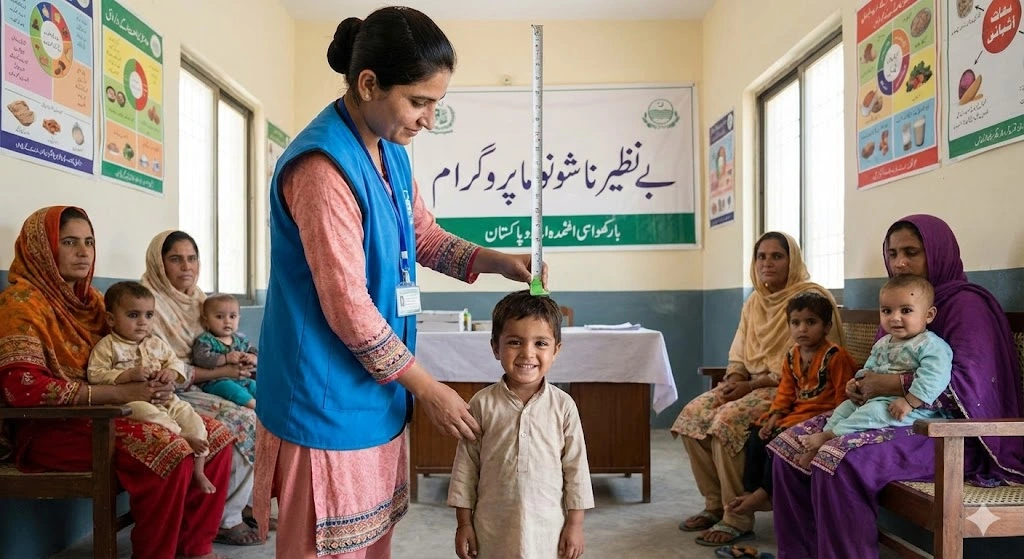
Pioneering Change: The Benazir Nashonuma Programme Addressing Child Malnutrition in Pakistan
The Benazir Nashonuma Programme stands as a crucial intervention by the Benazir Income Support Programme (BISP) to combat Pakistan’s severe child nutrition crisis. With alarming statistics revealing that 40.2% of children are stunted, 28.9% are underweight, and 17.7% suffer from wasting, Pakistan bears the region’s second-highest burden of child malnutrition. This public health challenge significantly undermines human development and long-term well-being across the nation.
Recognizing the urgent need for action, the Benazir Nashonuma Programme was designed as a Conditional Cash Transfer (CCT) initiative. It aims to incentivise beneficiary families to utilise essential health and nutrition services, particularly targeting the critical “first 1,000 days” of a child’s life. This period, from conception to the second birthday, is paramount for establishing a robust foundation for physical growth and cognitive development.
Unpacking Pakistan’s Child Nutrition Crisis: The Benazir Nashonuma Background
Pakistan’s struggle with child malnutrition represents a profound developmental hurdle. The high prevalence of stunting, underweight children, and wasting highlights systemic issues that affect millions of futures. These figures underscore the necessity of comprehensive and sustained interventions to safeguard the health of the youngest and most vulnerable population segments.
The pivotal role of the “first 1,000 days” is central to the programme’s philosophy. During this crucial window, a child’s neurological development exhibits high plasticity, making early and timely interventions exceptionally effective. Investments made in early childhood nutrition directly contribute to human capital development, which is universally recognised as a key driver of sustainable economic growth and societal progress.
Designing the Intervention: The Benazir Nashonuma Programme Objectives
The design of the Benazir Nashonuma Programme underwent rigorous scrutiny. It was initially approved by the Technical Design Committee of the BISP Board, followed by a formal review during the 34th BISP Board meeting. This meticulous planning ensured that the programme would be robust, targeted, and aligned with national health priorities.
The programme’s primary objectives are multi-faceted, addressing various dimensions of maternal and child health. This holistic approach seeks to create a lasting impact on participating households. The Benazir Nashonuma Programme is a testament to the government’s commitment to improving public health outcomes through targeted social safety nets.
Primary Goals: Enhancing Health Through the Benazir Nashonuma Intervention
The core objectives underpinning the Benazir Nashonuma Programme are:
- Preventing Stunting: A primary goal is to reduce the incidence of stunting in children under two years of age, thereby supporting their full growth potential.
- Improving Weight Gain: The program aims to enhance weight gain among pregnant women, crucial for both maternal health and healthy fetal development.
- Reducing Anaemia and Micronutrient Deficiencies: Addressing common nutritional deficiencies, which can have long-term health consequences for both mothers and children.
- Enhancing Awareness: Educating and empowering mothers on maternal, infant, and early childhood nutrition practices.
- Reducing Disease Burden: Lowering the prevalence of illness through improved utilisation of essential health and nutrition services.
- Preventing Low Birth Weight: A critical objective focusing on ensuring healthier outcomes for newborns, reducing risks associated with developmental challenges.
Aligning with Global Goals: The Benazir Nashonuma and SDGs
Proper nutrition is not merely a health concern; it’s a foundational element for achieving broader global developmental objectives. According to the Copenhagen Consensus, ensuring proper nutrition is considered the single most cost-effective intervention for improving human well-being globally. This highlights the profound impact of programmes like the Benazir Nashonuma Programme.
The Benazir Nashonuma Programme directly supports the achievement of several Sustainable Development Goals (SDGs). These include SDG 2 (Zero Hunger), SDG 3 (Good Health and Well-being), SDG 1 (No Poverty), and SDG 4 (Quality Education), all of which are intrinsically linked to human capital development and societal resilience. This integration with international targets underscores its national and global significance.
Operational Framework: Benazir Nashonuma Programme Design Parameters
The programme specifically targets pregnant and lactating women (PLW) and their children under two years of age who belong to existing BISP beneficiary households. This ensures that the intervention reaches those most in need, leveraging the established infrastructure of the Benazir Income Support Programme. The carefully structured cash support and conditionalities are crucial for its effectiveness, as documented on platforms like Schemess.com for similar social programmes.
The cash support provided by the Benazir Nashonuma Programme is meticulously tiered. Each pregnant or lactating woman and boy child receives PKR 2,000 per quarter. In an important step towards gender equity, each girl child receives PKR 2,500 per quarter, acknowledging specific vulnerabilities and encouraging investment in female children. This financial incentive is directly tied to a set of crucial health and nutrition behaviours.
Fulfilling Requirements: Conditionalities of the Benazir Nashonuma Programme
In exchange for the financial support, beneficiary mothers are required to adhere to specific conditionalities, ensuring active participation in their health journey:
- Regular Health Check-ups: Attending regular antenatal and postnatal health check-ups is mandatory, providing essential medical oversight during pregnancy and after childbirth.
- Nutrition Awareness Sessions: Participation in nutrition awareness sessions equips mothers with vital knowledge for optimal feeding practices for themselves and their children.
- Specialized Nutritious Food (SNF) Consumption: Mothers are required to consume Specialized Nutritious Food, which addresses specific micronutrient needs.
- Child Health Monitoring: Ensuring timely immunization and regular health check-ups for their children under two years of age.
Expanding Impact: The Benazir Nashonuma Programme’s Reach and Expansion
Originally, the Benazir Nashonuma Programme was piloted in 14 districts across the country to test its efficacy and identify best practices. This initial phase proved successful, demonstrating the programme’s potential to drive significant improvements in health and nutrition outcomes. The positive results provided a strong basis for further expansion.
Following this successful implementation, the BISP Board approved the nationwide expansion of the Benazir Nashonuma Programme. As of the latest update, the programme is operational in 158 districts across Pakistan, significantly broadening its reach. This extensive network includes 512 Nashonuma Centres, which also incorporate mobile outreach sites to serve remote and hard-to-reach communities. The expansion reflects a strategic commitment to addressing malnutrition at a national scale.
To date, the Benazir Nashonuma Programme has made substantial progress in reaching vulnerable populations. It has extended its support to over 1,275,800 individuals. This impressive reach includes 645,800 pregnant women and 630,000 children, underscoring the programme’s pivotal role in safeguarding the health and future of Pakistan’s next generation.
Conclusion: Sustaining the Future Through the Benazir Nashonuma Programme
The Benazir Nashonuma Programme represents a vital and structured effort to tackle Pakistan’s entrenched child malnutrition crisis. By strategically combining financial incentives with essential health and nutrition services, it aims to break the intergenerational cycle of poor health and underdevelopment. The programme’s commitment to the critical ‘first 1,000 days’ window, its strong alignment with Sustainable Development Goals, and its expanding nationwide footprint illustrate a focused national resolve. The outcomes of this important initiative will undoubtedly shape the health, cognitive abilities, and economic potential of a significant portion of Pakistan’s future workforce, reinforcing the importance of sustained investment in early childhood nutrition.
Frequently Asked Questions about the Benazir Nashonuma Programme
Q1: What is the Benazir Nashonuma Programme?
The Benazir Nashonuma Programme is a Conditional Cash Transfer (CCT) intervention initiated by the Benazir Income Support Programme (BISP) in Pakistan. Its primary goal is to improve the health and nutritional status of pregnant and lactating women and their children under two years of age by incentivising the uptake of essential health and nutrition services.
Q2: Why was the Benazir Nashonuma Programme created?
The programme was created to address Pakistan’s serious child nutrition crisis, where a high percentage of children suffer from stunting, being underweight, and wasting. It targets the critical first 1,000 days of a child’s life, recognizing this period as crucial for long-term physical and cognitive development.
Q3: Who are the primary beneficiaries of the Benazir Nashonuma Programme?
The programme targets pregnant and lactating women (PLW) and their children under two years of age who belong to households already registered as beneficiaries of the Benazir Income Support Programme (BISP).
Q4: What kind of financial support do beneficiaries receive?
Beneficiary mothers receive PKR 2,000 per quarter for each pregnant/lactating woman and boy child. To promote gender equity, each girl child receives PKR 2,500 per quarter.
Q5: What are the conditions for receiving cash support under the programme?
Beneficiary mothers are required to attend regular antenatal and postnatal health check-ups, participate in nutrition awareness sessions, consume Specialized Nutritious Food (SNF), and ensure timely immunization and regular health check-ups for their children.
Q6: How extensive is the Benazir Nashonuma Programme’s reach?
After a successful pilot phase in 14 districts, the programme has expanded nationwide and is currently operational in 158 districts across Pakistan, with 512 Nashonuma Centres, including mobile outreach sites. To date, it has reached over 1,275,800 individuals, including 645,800 pregnant women and 630,000 children.
Q7: How does the Benazir Nashonuma Programme contribute to Sustainable Development Goals (SDGs)?
The programme directly supports several SDGs, particularly those related to health (SDG 3), poverty reduction (SDG 1), zero hunger (SDG 2), and human development. It aligns with the principle that proper nutrition is one of the most cost-effective interventions for improving human well-being.