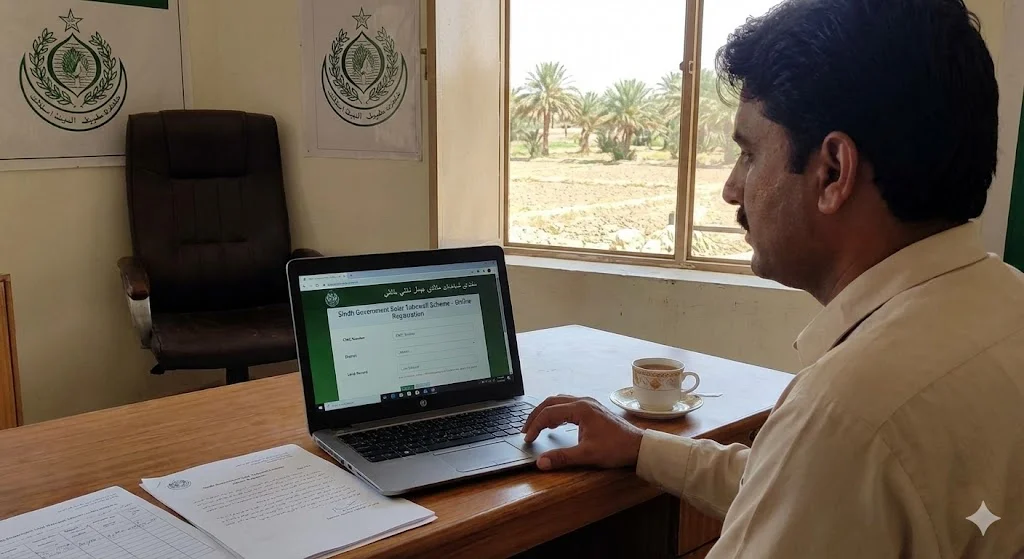
The Sindh Government’s solar tubewell schemes represent a significant stride towards modernizing the province’s agricultural sector. These initiatives are designed to reduce the dependency of farmers on conventional, often expensive, energy sources by providing subsidized solar pumps. The core objective is to lower operational energy costs for irrigation, thereby enhancing farmers’ profitability and promoting sustainable agricultural practices across Sindh. Through strategic programs like the Benazir Hari Card, the government aims to empower farmers with green technology.
Addressing Agricultural Challenges with Sindh Government’s Solar Tubewell Schemes
Agriculture forms the backbone of Sindh’s economy, yet farmers frequently grapple with substantial challenges. Foremost among these are the escalating energy costs associated with running traditional diesel or electric tubewells for irrigation. Erratic power supply and the environmental impact of fossil fuels further compound these issues, hindering productivity and economic stability. In response to these pressing concerns, the Sindh Government’s solar tubewell schemes offer a viable, long-term solution by integrating renewable energy into farming practices. The deployment of these subsidized solar pumps is crucial for fostering resilience within the agricultural community.
An official from the Sindh Agriculture Department, speaking generally about the government’s commitment, noted, “Our focus is to lessen the financial burden on farmers while simultaneously moving towards environmentally friendly solutions. The widespread adoption of solar technology through these schemes will ensure both economic viability and ecological sustainability for future generations.”
Core Pillars of the Sindh Government’s Solar Tubewell Initiatives
The Sindh Government has rolled out several key initiatives under its umbrella of solar tubewell schemes, each tailored to address specific aspects of agricultural support and modernization. These programs underscore a holistic approach to sustainable irrigation and energy management, providing tangible benefits to eligible farmers.
The Benazir Hari Card: Empowering Eligible Farmers
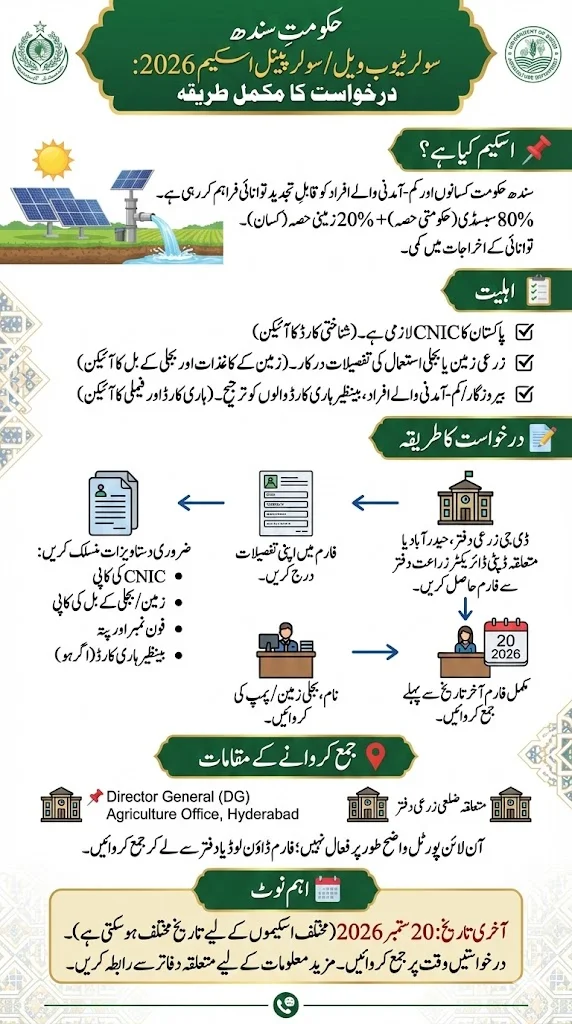
The Benazir Hari Card program stands out as a cornerstone of these initiatives, specifically targeting small to medium-sized landholders. Through this scheme, registered farmers possessing 5 to 25 acres of land are offered a substantial 80% subsidy on solar-powered drip irrigation systems and solar pumps. This significant financial incentive dramatically reduces the upfront cost for farmers, making advanced, water-efficient technologies accessible. The aim is to promote precision agriculture and efficient water use among eligible farmers.
The Sindh Solar Energy Project: Towards Sustainable Irrigation
Complementing the Benazir Hari Card, the Sindh Solar Energy Project is a broader initiative focused on the widespread adoption of solar power within the province. This project supports the provision of solar units to ensure uninterrupted power supply for various agricultural needs, including irrigation. It directly contributes to the goal of reducing overall energy costs for farmers by shifting away from fossil fuels and unreliable grid electricity. This commitment to sustainable irrigation is central to the project’s mission.
Sindh Water and Agriculture Transformation (SWAT) Project: Managing Water Tables and Energy Costs
The Sindh Water and Agriculture Transformation (SWAT) Project represents another critical component of the Sindh Government’s solar tubewell schemes. Its primary objective is to convert existing diesel and electric pumps to solar power, thereby drastically reducing operational costs and improving water management efficiency. This project emphasizes controlling water tables through sustainable pumping practices and aids in energy savings, particularly benefiting small farmers by equipping them with green technology. The SWAT Project is instrumental in optimizing both water and energy resources.
Benefiting Farmers: Navigating the Sindh Government’s Solar Tubewell Scheme Application
For farmers, understanding the mechanics of these schemes is paramount to availing the benefits. The process has been streamlined to ensure accessibility and transparency, allowing eligible farmers to transition to solar power.
Eligibility for Subsidized Solar Pumps
Eligibility criteria are primarily based on land holdings and farmer registration status. Typically, farmers owning between 5 and 25 acres are prioritized, ensuring that the benefits reach those who need them most. These parameters ensure that the Sindh Government’s solar tubewell schemes effectively target the intended beneficiaries.
Application Process via Agriculture Engineering Offices
To apply for the Sindh Government’s solar tubewell schemes, eligible farmers must visit their nearest Agriculture Engineering office. The application requires essential documents such as their Computerized National Identity Card (CNIC) and land ownership papers. These offices serve as the primary point of contact, guiding farmers through the necessary procedures to secure subsidized solar pumps. The transparency of this process is crucial for widespread adoption.
Financial Support and Cost-Sharing in the Sindh Government’s Schemes
The government provides substantial subsidies, as exemplified by the 80% contribution under the Benazir Hari Card for drip irrigation systems. Farmers are typically required to contribute a portion of the cost, with payments often structured in installments that align with the completion of work and verification by the department. This cost-sharing model, often facilitated by loans or direct government contributions, makes subsidized solar pumps an economically viable option for many.
The Role of Contractors in Implementing Sindh Government’s Solar Tubewell Projects
The successful implementation of the Sindh Government’s solar tubewell schemes relies heavily on a network of qualified contractors and firms. These entities play a vital role in the installation and maintenance of the solar pumping systems.
Firms interested in participating must pre-qualify and be registered with the Sindh Revenue Board (SRB). The installation process involves specific agreements between the contractor, the farmer, and the Agriculture Department, ensuring adherence to quality standards and project specifications. Payments to contractors are typically disbursed by the District Accounts Officer upon verification of completed work. For detailed guidelines on contractor registration and project implementation, interested parties might consult official Sindh government agricultural development portals which often list approved schemes and partners, similar to comprehensive platforms like Schemess.com for various government initiatives. This structured approach helps in efficient project delivery.
The Broader Impact of Sindh Government’s Solar Tubewell Schemes on Energy Costs and Agriculture
The long-term impact of the Sindh Government’s solar tubewell schemes extends far beyond individual farm gates. These initiatives are poised to bring about a significant transformation in the province’s agricultural landscape. By reducing reliance on expensive and often scarce diesel or grid electricity, farmers can substantially lower their operational energy costs, leading to higher profitability and improved livelihoods. The consistent availability of power from subsidized solar pumps ensures timely irrigation, boosting crop yields and overall agricultural productivity.
Environmentally, these schemes contribute to a reduced carbon footprint, aligning with global efforts to combat climate change. The promotion of drip irrigation systems also fosters responsible water management, a critical aspect in a region susceptible to water scarcity. Overall, these initiatives bolster food security, drive rural economic growth, and position Sindh as a leader in sustainable agriculture through green technology and efficient water table control.
FAQs
Who is eligible for the Benazir Hari Card scheme under the Sindh Government’s solar tubewell initiatives?
Farmers registered with the scheme and owning 5 to 25 acres of land are eligible for the Benazir Hari Card, which provides significant subsidies for solar-powered irrigation.What kind of subsidy is offered for solar pumps through these schemes?
Under programs like the Benazir Hari Card, eligible farmers can receive an 80% subsidy on solar-powered drip irrigation systems and solar pumps, drastically reducing their financial outlay.Where can farmers apply for the Sindh Government’s solar tubewell schemes?
Farmers can apply for these schemes at their nearest Agriculture Engineering office, where they will need to provide their CNIC and land documents.What are the primary benefits of the Sindh Water and Agriculture Transformation (SWAT) Project?
The SWAT Project aims to convert traditional pumps to solar, reducing energy costs, improving water management through water table control, and supporting small farmers with green technology.How do these schemes promote sustainable irrigation?
By providing subsidized solar pumps and promoting efficient drip irrigation systems, the schemes reduce reliance on fossil fuels, conserve water, and lower the carbon footprint, leading to sustainable irrigation practices.Do small farmers benefit specifically from these solar tubewell initiatives?
Yes, these initiatives, particularly the Benazir Hari Card and the SWAT Project, are designed to benefit small to medium landholders (e.g., 5-25 acres), making green technology and reduced energy costs accessible to them.What role do contractors play in the implementation of these solar tubewell projects?
Pre-qualified and SRB-registered contractors are responsible for the installation of the solar pumping systems, working under specific agreements with the farmers and the Agriculture Department, with payments disbursed upon verified completion of work.
Conclusion
The Sindh Government’s solar tubewell schemes represent a forward-thinking and comprehensive approach to addressing the multifaceted challenges faced by the agricultural sector. Through well-structured programs like the Benazir Hari Card, the Sindh Solar Energy Project, and the Sindh Water and Agriculture Transformation (SWAT) Project, the government is successfully deploying subsidized solar pumps and drip irrigation systems.