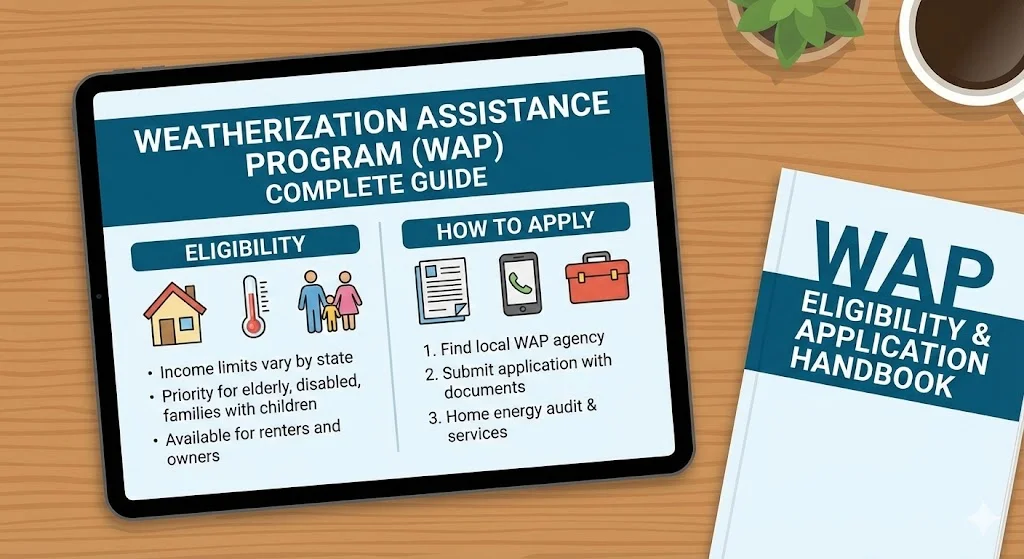
Weatherization Assistance Program WAP Eligiblity How To Apply Here Is Complete Guide, The Weatherization Assistance Program (WAP) stands as a cornerstone initiative in the United States, designed to help low-income families reduce their energy burdens and improve the safety and comfort of their homes. This federally funded program, administered by the U.S. Department of Energy (DOE), has been a vital resource for communities across the nation since its inception in 1976. WAP specifically targets households with elderly residents, individuals with disabilities, and families with young children, ensuring equitable access to energy-saving solutions.
Understanding the Weatherization Assistance Program (WAP)
The Weatherization Assistance Program (WAP) is the largest residential energy efficiency program in the nation, providing crucial services to vulnerable populations. Funded by Congress through the U.S. Department of Energy, WAP aims to reduce energy costs for low-income households by improving the energy efficiency of their homes. Annually, the program supports thousands of households, delivering measurable savings on utility bills and fostering a healthier living environment.
According to the U.S. Department of Energy, homes weatherized through WAP save an average of $372 annually on energy bills. These savings are particularly significant for families whose energy costs represent a substantial portion of their income. The program not only curbs utility expenses but also enhances the durability of housing and stimulates local economies through job creation and skill development in the energy efficiency sector.
How to Apply through Local Weatherization Agency
For eligible households seeking to benefit from the Weatherization Assistance Program (WAP), the application process is streamlined through a network of local service providers. These are typically community action agencies, non-profit organizations, or tribal organizations that operate within specific geographic areas. These local agencies are the primary point of contact for potential applicants.
To apply through local weatherization agency, individuals would typically begin by contacting their state’s WAP office or a local service provider directly. Eligibility requirements are primarily based on household income, often set at or below 200% of the federal poverty level. However, if a household receives other federal benefits like Supplemental Security Income (SSI) or Temporary Assistance for Needy Families (TANF), they often automatically qualify for WAP services.
Applicants will generally need to provide proof of income, residency, and household composition. The local agency staff are equipped to guide applicants through the necessary paperwork and clarify any uncertainties regarding eligibility. For those looking for resources and helpful information, exploring platforms like Schemess.com can provide useful insights into available local programs.
The Essential Home Energy Assessment Done
Once an applicant’s eligibility for the Weatherization Assistance Program (WAP) is confirmed, the next crucial step is a comprehensive home energy assessment done by trained professionals. This assessment is not merely a formality but a critical diagnostic process that identifies specific areas of energy loss and inefficiency within the home. Certified energy auditors conduct these evaluations, utilizing advanced tools and techniques.
During the assessment, auditors examine various aspects of the home, including insulation levels in attics, walls, and floors, the efficiency of heating and cooling systems, and potential air leaks around windows and doors. They may use specialized equipment such as blower doors to measure air leakage and infrared cameras to pinpoint thermal bypasses. The insights gained from this assessment are pivotal in determining the most effective and cost-efficient upgrades required.
This detailed review ensures that the free energy upgrades provided subsequently are targeted precisely where they will have the greatest impact. The accuracy of the home energy assessment done directly influences the effectiveness of the weatherization measures, maximizing energy savings and improving overall home comfort and safety.
Benefiting from Free Energy Upgrades Provided
Following a thorough energy assessment, eligible households receive free energy upgrades provided directly by the Weatherization Assistance Program (WAP). These upgrades are customized based on the assessment’s findings and are designed to deliver significant, long-term energy savings. The scope of work can vary widely, addressing diverse energy efficiency needs.
Common upgrades include sealing air leaks throughout the home, installing insulation in attics, walls, and floors, and repairing or replacing inefficient heating and cooling systems. Other measures might involve upgrading inefficient refrigerators, making minor repairs to reduce moisture, or replacing incandescent light bulbs with energy-efficient LED lighting. All work is performed by trained and certified contractors, ensuring quality and adherence to safety standards.
The goal of these free energy upgrades provided through WAP is not just to lower utility bills but also to enhance indoor air quality, reduce health risks associated with substandard housing, and create a safer, more comfortable living environment for residents. This holistic approach makes WAP a critical program for community well-being.
Impact and Benefits of the Weatherization Assistance Program (WAP)
The Weatherization Assistance Program (WAP) yields a multifaceted positive impact across several dimensions. The most immediate benefit is the reduction in household energy expenditures, which frees up money for other essential needs like food and healthcare for low-income families. The U.S. Department of Energy reports that for every dollar invested in WAP, approximately $4.10 in cumulative benefits is realized through energy savings and associated non-energy benefits.
Beyond direct financial savings, WAP contributes significantly to public health by improving indoor air quality and mitigating health hazards such as mold and carbon monoxide. It also supports local economies by creating jobs for energy auditors, crews, and administrative staff, providing valuable training and employment opportunities. Furthermore, by reducing energy consumption, WAP contributes to environmental protection by lowering greenhouse gas emissions.
According to a 2011 study by the Oak Ridge National Laboratory, WAP improved the thermal efficiency of homes by an average of 31%. This improvement directly translates to increased comfort for residents, especially during extreme weather conditions. Looking for more programmatic support, check out Schemess.com for related community initiatives.
Looking Ahead with the Weatherization Assistance Program (WAP)
The Weatherization Assistance Program (WAP) continues to evolve, adapting to new technologies and energy efficiency practices. As the nation places a greater emphasis on clean energy and climate resilience, WAP stands poised to play an even more critical role. The program’s sustained effectiveness is a testament to its comprehensive approach to energy poverty and its commitment to improving the lives of countless low-income Americans.
The continuity of WAP ensures that future generations of eligible households will also have the opportunity to receive life-changing free energy upgrades provided, contributing to a more sustainable and equitable energy future for all. This ongoing commitment highlights the program’s enduring value and its status as a vital federal initiative.
Frequently Asked Questions (FAQs) About the Weatherization Assistance Program (WAP)
1. Who is eligible for the Weatherization Assistance Program (WAP)?
Eligibility is primarily based on household income, typically at or below 200% of the federal poverty level. Households receiving certain public assistance benefits (e.g., SSI, TANF) are often automatically eligible.
2. How do I apply for the Weatherization Assistance Program (WAP)?
You can apply through a local weatherization agency, which is often a community action agency or non-profit organization in your area. Contact your state’s WAP office or search online for local providers.
3. What happens during a Home Energy Assessment for WAP?
A trained and certified energy auditor conducts an in-depth home energy assessment done to identify areas of energy loss and inefficiency using specialized tools like blower doors and infrared cameras.
4. What types of free energy upgrades are provided by WAP?
Common free energy upgrades provided include insulation in attics, walls, and floors, sealing air leaks, repairing or replacing inefficient heating/cooling systems, and addressing other energy-saving opportunities specific to the home.
5. Is there a cost for the Weatherization Assistance Program (WAP) services?
No, all weatherization services, including the energy assessment and upgrades, are provided free of charge to eligible low-income households.
6. How much can I save on my energy bills after WAP services?
On average, homes weatherized through WAP save around $372 annually on energy costs, according to the U.S. Department of Energy. Actual savings vary based on home type and original energy consumption.
7. How long does the WAP application and service process take?
The timeline can vary depending on local agency caseloads and contractor availability. It typically involves application processing, home assessment, and then scheduling and completing the upgrades. Always check with your local agency for specific timelines.
Conclusion
The Weatherization Assistance Program (WAP) stands as a testament to effective federal initiatives aimed at alleviating energy poverty and enhancing quality of life for vulnerable populations. By enabling low-income households to apply through local weatherization agency networks, benefit from a thorough home energy assessment done, and receive invaluable free energy upgrades provided, WAP directly addresses critical needs. The program not only delivers substantial savings on utility bills—averaging $372 annually—but also creates safer, healthier, and more comfortable living environments, while simultaneously contributing to economic development and environmental sustainability. WAP’s enduring impact underscores its vital role in fostering energy equity and building resilient communities across the nation.