Ehsaas Rashan Riayat Program: Providing Subsidized Ration for Low-Income Families
The Ehsaas Rashan Riayat Program, a cornerstone of Pakistan’s social protection initiatives, offers crucial subsidized rations for low-income families. Launched under the broader Ehsaas umbrella, this program aims to alleviate the burden of rising food costs and ensure food security for the country’s most vulnerable households. It represents a significant step towards creating a robust welfare state, directly addressing the nutritional needs of those struggling financially.
This targeted intervention by the government seeks to provide essential relief, especially in times of economic hardship and inflation. By offering discounts on staple food items, the Ehsaas Rashan Riayat Program strives to make daily necessities accessible to millions of deserving individuals nationwide, fostering greater stability within communities.
Background: The Broader Ehsaas Framework and Subsidized Ration Goals
The Ehsaas initiative was launched in 2019 with a comprehensive agenda focusing on poverty alleviation, social protection, human capital development, and jobs and livelihoods. It operates on the principles of transparency and digital governance to ensure efficient delivery of aid. The Ehsaas Rashan Riayat Program emerged from this framework as a direct response to increasing food inflation, specifically targeting relief for low-income families.
Its primary goal is to buffer the effects of economic pressures on the poorest segments of society by subsidizing essential food items. This strategic move aligns with national efforts to enhance social equity and improve living standards across the country, making a tangible difference in the daily lives of beneficiaries.
Mechanics of the Ehsaas Rashan Riayat Program for Low-Income Families
The operational mechanism of the Ehsaas Rashan Riayat Program is designed for efficiency and transparency, primarily leveraging digital technology. Eligible families receive a subsidy on the purchase of flour, pulses, cooking oil/ghee, and other necessities through designated utility stores or a network of registered small kiryana stores. This direct benefit transfer system minimizes administrative overhead and ensures that subsidies reach the intended recipients.
Beneficiaries are identified through the National Socio-Economic Registry (NSER) survey, which compiles data on household poverty scores. Once identified, recipients are notified and can avail their monthly subsidy via a simple digital verification process at specified outlets. This system underpins the program’s ability to deliver subsidized ration for low-income families directly. More details can often be found on platforms like Schemess.com, which track government initiatives.
Eligibility and Enrollment for Getting Subsidized Ration
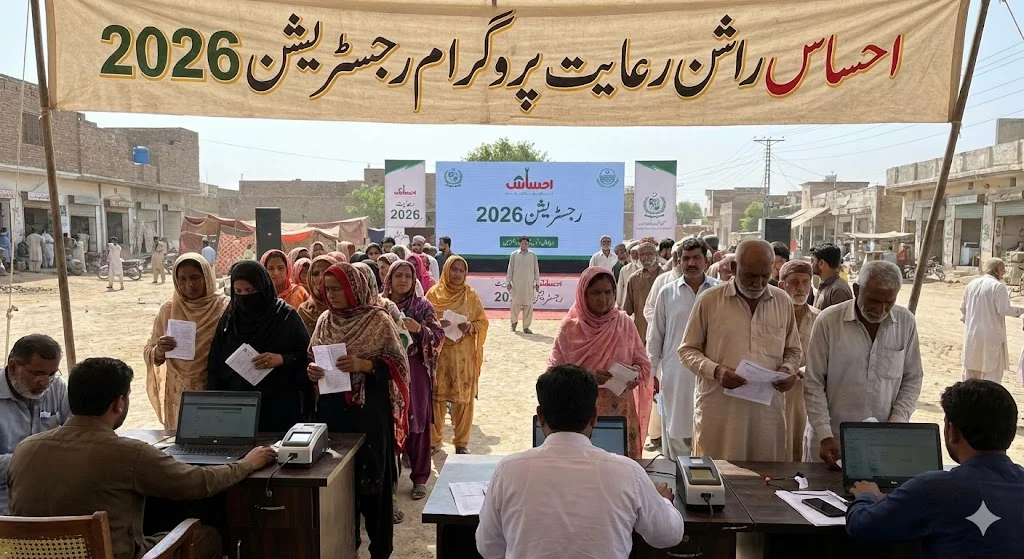
To benefit from the Ehsaas Rashan Riayat Program, families must meet specific eligibility criteria, primarily based on their poverty score derived from the NSER survey. Generally, households with a monthly income below a certain threshold are eligible for the program. The registration process has been simplified to ensure maximum reach for low-income families seeking subsidized ration assistance.
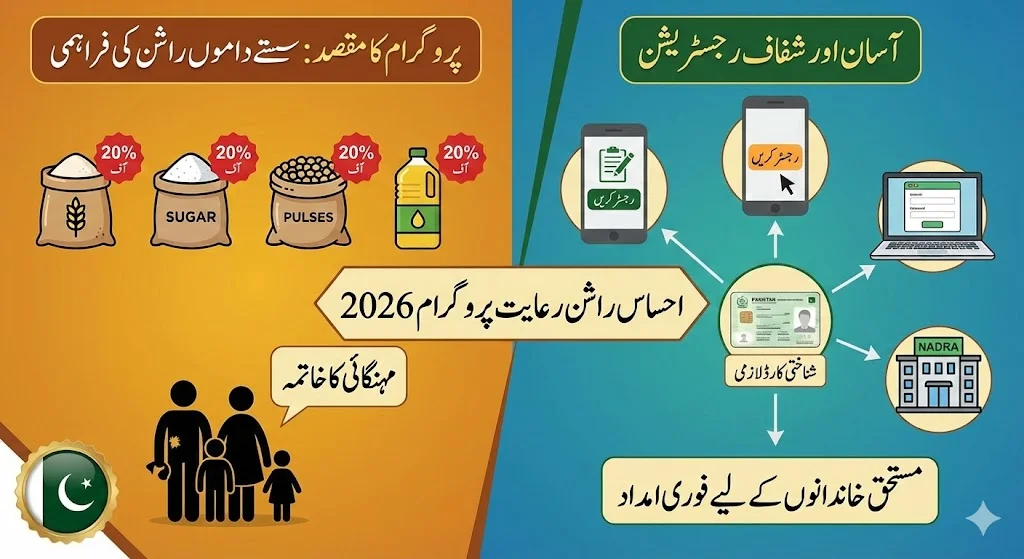
Families can register online via a dedicated web portal or through an SMS service by sending their CNIC number to a specified shortcode. Once registered and verified, recipients receive confirmation messages and can then access their subsidized items. This streamlined process is critical for ensuring that eligible households can quickly avail themselves of the benefits and support.
Impact and Objectives of the Ehsaas Rashan Riayat Program
The core objective of the Ehsaas Rashan Riayat Program is to provide essential financial relief and improve food security for Pakistan’s low-income families. By offering a discount of 20-25% on selected staple foods, the program significantly reduces household expenditure on necessities. This can free up income for other critical needs, such as healthcare or education.
According to Dr. Sania Nishtar, former Special Assistant to the Prime Minister on Poverty Alleviation and Social Protection, the program was envisioned to reach “over 20 million families,” impacting approximately 130 million people nationwide. This targeted approach is vital for shielding vulnerable communities from the adverse effects of inflation and economic instability, directly contributing to poverty reduction efforts across the country.
Addressing Challenges and Sustaining Subsidized Ration Initiatives
While the Ehsaas Rashan Riayat Program has made considerable strides, like any large-scale social welfare initiative, it faces ongoing challenges. These include ensuring equitable access in remote areas, continuous verification of beneficiary data, and maintaining the vast network of kiryana and utility stores participating in the program. Furthermore, ongoing awareness campaigns are crucial to inform all eligible low-income families about their eligibility and the registration process for subsidized ration benefits.
The government remains committed to refining the program, incorporating feedback, and leveraging technology to overcome logistical hurdles. Plans often include expanding the network of partner stores and enhancing the digital infrastructure to ensure seamless service delivery. Continuous improvements are essential for the long-term sustainability and effectiveness of such a vital social safety net.
FAQs About the Ehsaas Rashan Riayat Program
- What is the Ehsaas Rashan Riayat Program?
It’s a government initiative in Pakistan providing a subsidy on essential food items (like flour, pulses, and oil/ghee) to low-income families to help them cope with inflation and ensure food security. - Who is eligible for the Ehsaas Rashan Riayat Program?
Low-income families identified through the National Socio-Economic Registry (NSER) survey, typically those with a specified low monthly income threshold, are eligible. - How can I apply for the Ehsaas Rashan Riayat Program?
Eligible families can register via a dedicated web portal (ehsaas.punjab.gov.pk/rashan) or by sending their CNIC number via SMS to the designated shortcode. - What kind of subsidy do beneficiaries receive?
Beneficiaries typically receive a 20-25% discount on the purchase of approved staple food items from participating kiryana stores or utility stores. - Where can I avail the subsidized ration?
The subsidized ration can be availed at registered kiryana stores and utility stores across Pakistan that are part of the Ehsaas program network. - How are beneficiaries verified for the Ehsaas Rashan Riayat Program?
Verification is done digitally through biometric authentication using the beneficiary’s CNIC at the point of sale, linking to data from the NSER. - Is this program available nationwide?
Yes, the Ehsaas Rashan Riayat Program is a national initiative aimed at reaching eligible low-income families across all provinces of Pakistan. For more information, users often check official government websites or resources like Schemess.com.
Conclusion
The Ehsaas Rashan Riayat Program stands as a critical pillar of Pakistan’s efforts to support its most vulnerable populations. By providing essential subsidized ration for low-income families, the initiative directly tackles food insecurity and alleviates the financial strain imposed by economic fluctuations. While challenges in implementation are inherent to such vast programs, the commitment to transparency, digital efficiency, and continuous improvement underscores its potential for long-term positive impact. The program not only offers immediate relief but also contributes to fostering a more equitable society, strengthening the social safety net for millions of deserving households across Pakistan.