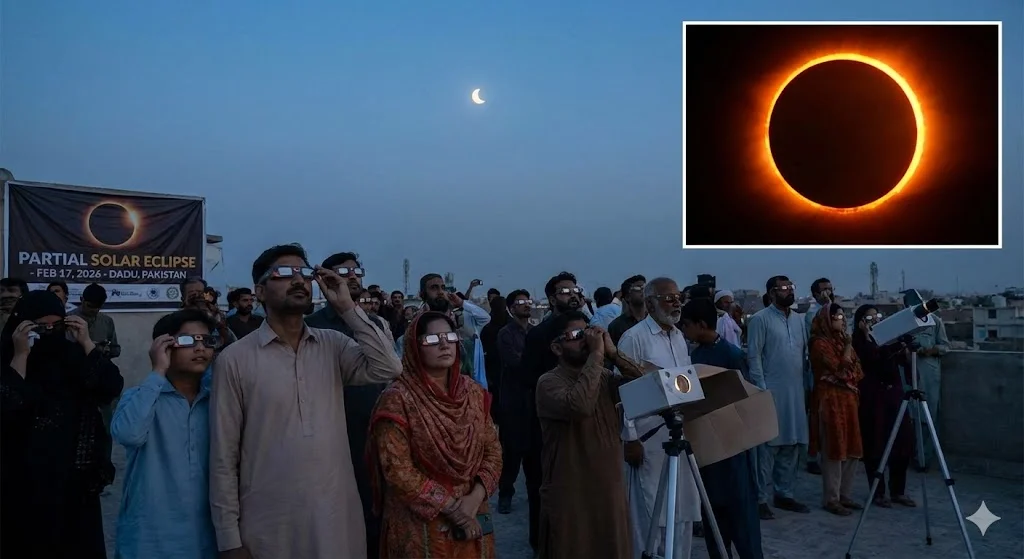
Partial Solar Eclipse to Grace Global Skies, Featuring a Rare ‘Ring of Fire’ Phenomenon
A partial solar eclipse is set to captivate observers in various parts of the world on February 17, 2026, coinciding with a rare “ring of fire” annular solar eclipse exclusively visible over Antarctica. This double celestial spectacle offers diverse viewing opportunities, from a subtle dimming of the sun to a breathtaking cosmic alignment, attracting the attention of astronomers and skywatchers globally.
Understanding the Partial Solar Eclipse
A partial solar eclipse occurs when the Moon passes between the Sun and Earth, but only partially obscures the Sun. From our perspective on Earth, the Moon appears to take a bite out of the Sun, with the extent of the “bite” depending on the observer’s location. These events are more common than total solar eclipses and can be viewed by a wider audience, provided proper safety precautions are followed.
The Rare ‘Ring of Fire’ Annular Solar Eclipse
The highlight of the February 17 event is undoubtedly the annular solar eclipse, widely known as the “ring of fire” phenomenon. This occurs when the Moon passes directly in front of the Sun but is too far away from Earth to completely cover the solar disk. As a result, a brilliant ring of sunlight remains visible around the Moon’s silhouette. For this particular event, the Moon will cover an impressive 96% of the sun. This “ring of fire” effect is predicted to last approximately 2 minutes and 20 seconds, according to EarthSky.org, offering a brief yet spectacular display for those in its direct path. The entire eclipse journey, including its partial phases, will extend for 271 minutes in total.
Visibility of the Annular Solar Eclipse
Critically, the awe-inspiring “ring of fire” annular solar eclipse on February 17, 2026, will only be visible from Antarctica. NASA confirms this specific geographic limitation, making it a challenging event for most general skywatchers to witness directly. Expeditions to the southernmost continent will be the only way to experience the full annular phase.
Broad Visibility of the Partial Solar Eclipse
While the “ring of fire” is geographically restricted, the partial solar eclipse phases will be much more broadly distributed. Portions of Antarctica, Africa, and South America, along with vast stretches of the Pacific, Indian, and Atlantic oceans, are all within the viewing path. This widespread visibility ensures that millions across multiple continents will have a chance to observe at least a segment of the solar phenomenon, even if it’s not the full “ring of fire.” For those interested in tracking the exact timings and angles from their specific locations, resources found on Schemess.com often provide detailed predictive maps.
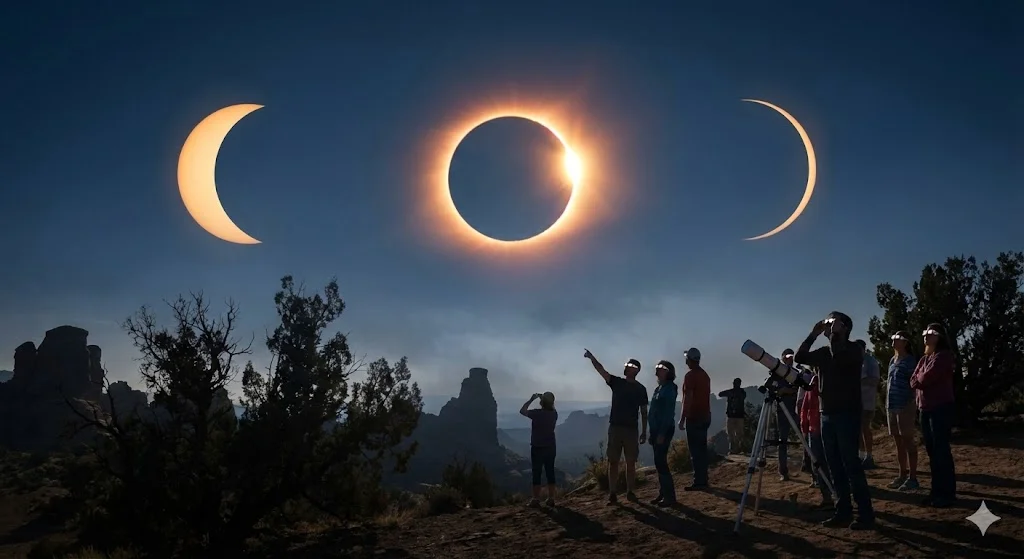
Ensuring Safety During Any Solar Eclipse Viewing
Regardless of whether you are viewing a partial solar eclipse or an annular one, proper eye protection is paramount. Staring directly at the sun, even during an eclipse, can cause permanent eye damage, including blindness. Certified eclipse glasses, which meet the ISO 12312-2 international safety standard, are essential. Alternatively, telescopes or binoculars must only be used if equipped with certified solar filters specifically designed for safe solar viewing. Never use homemade filters or regular sunglasses.
Historical Context of the ‘Ring of Fire’ Phenomenon
Annular solar eclipses, while rare for any single location, are recurring celestial events. For instance, a notable “ring of fire” effect was observed over Albuquerque, New Mexico, on October 14, 2023. Another significant annular solar eclipse graced the skies over Easter Island in the Pacific Ocean, Chile, and parts of Argentina on October 2, 2024. These historical occurrences underscore the unique and captivating nature of such alignments, building anticipation for the upcoming February 17 event.
Observing Future Celestial Events
The February 17, 2026, partial and annular solar eclipse represents one of many fascinating celestial events that capture public imagination. Such phenomena serve as compelling reminders of the movements within our solar system and the grand scale of the universe. Enthusiasts routinely track future eclipses, meteor showers, and planetary alignments, eagerly awaiting opportunities for stargazing and scientific observation.
Conclusion
The upcoming partial solar eclipse and the rare “ring of fire” annular solar eclipse on February 17, 2026, promise to be a significant astronomical event. While the stunning “ring of fire” will demand an Antarctic journey, the widespread partial solar eclipse offers a chance for many across the globe to witness a piece of this celestial ballet. As always, embracing safe viewing practices remains the most crucial aspect for anyone hoping to experience the magic of the Sun and Moon’s alignment.
FAQs About the Upcoming Solar Eclipse
What is the difference between a partial solar eclipse and an annular solar eclipse?
A partial solar eclipse is when the Moon only covers a portion of the Sun. An annular solar eclipse is a specific type of partial eclipse where the Moon is directly in front of the Sun but appears smaller, leaving a “ring of fire” around its edges because the Moon is too far from Earth to completely block the Sun.When and where will the “ring of fire” be visible?
The “ring of fire” annular solar eclipse will occur on February 17, 2026, and will be exclusively visible from Antarctica, covering approximately 96% of the sun.Where can I see the partial solar eclipse?
The partial solar eclipse will be visible from broader regions, including parts of Antarctica, Africa, South America, and across the Pacific, Indian, and Atlantic oceans.How long will the “ring of fire” effect last?
The “ring of fire” effect from this annular eclipse is expected to last for 2 minutes and 20 seconds. The entire eclipse, including its partial phases, will last for 271 minutes.Is it safe to look at a solar eclipse?
No, it is never safe to look directly at any solar eclipse, whether partial or annular, without proper eye protection. Always use certified eclipse glasses (ISO 12312-2 standard) or telescopes/binoculars with appropriate solar filters.Has a “ring of fire” eclipse happened recently?
Yes, a “ring of fire” annular solar eclipse was observed in Albuquerque, New Mexico, on October 14, 2023, and later over Easter Island and parts of South America on October 2, 2024.What if I can’t travel to Antarctica for the “ring of fire”?
Even if you can’t witness the annular phase, many locations will experience a partial solar eclipse, offering a significant astronomical event to enjoy safely with proper eye protection. Online streams are also often available for major eclipses.